

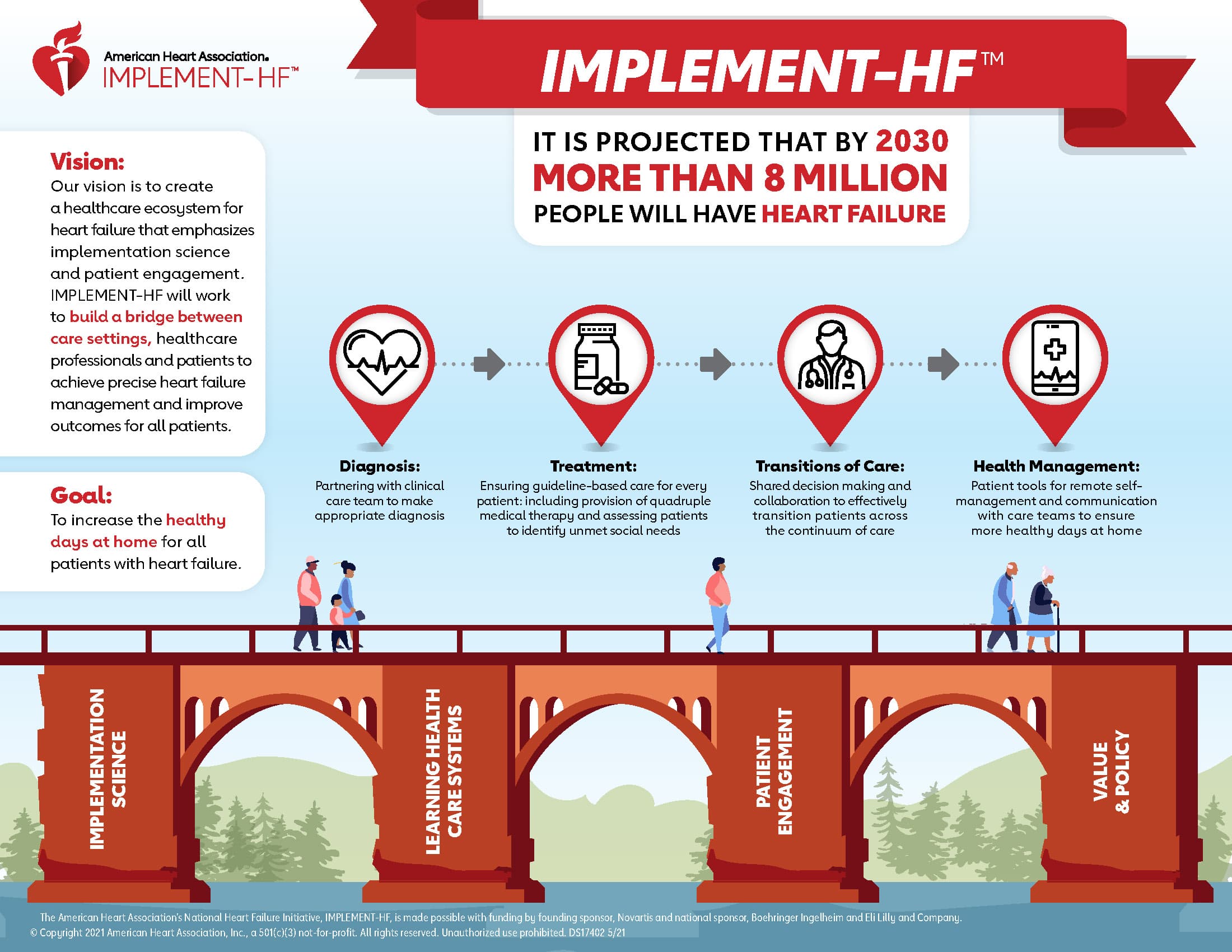
A new analysis reveals substantial improvements in heart failure treatment across U.S. hospitals through the American Heart Association's IMPLEMENT-HF initiative. The three-year quality improvement program has dramatically increased the use of quadruple medical therapy for patients with heart failure with reduced ejection fraction (HFrEF). The study, published in Circulation: Heart Failure, examined data from more than 43,000 patients across 67 hospitals. Researchers found that the use of four recommended drug classes rose from 4.7% to 44.6% at hospital discharge, and from 0% to 44.8% within 30 days post-discharge.
HFrEF affects nearly half of heart failure hospitalizations and carries a severe 75% five-year mortality rate. Despite clinical trials demonstrating the potential of quadruple therapy to improve survival, nationwide implementation has historically been low, particularly among underrepresented populations. The initiative's success spans racial, ethnic, and gender demographics, highlighting its comprehensive approach to healthcare equity. By creating a collaborative learning environment, hospitals shared best practices and monitored performance at regional and national levels.
Dr. Andrew Sauer, a lead study author, emphasized the initiative's significance in closing treatment gaps. The program's structured approach enabled hospitals to better serve diverse patient communities through real-time data and collaborative learning strategies. With heart failure affecting 6.7 million U.S. adults and projected to increase to over 8 million by 2030, this initiative represents a critical advancement in cardiovascular care. The American Heart Association's commitment to transforming treatment systems aims to ensure every patient receives the highest standard of heart failure treatment, regardless of geographical or socioeconomic barriers. The full study details are available at https://www.ahajournals.org/doi/10.1161/CIRCHEARTFAILURE.123.011234.