

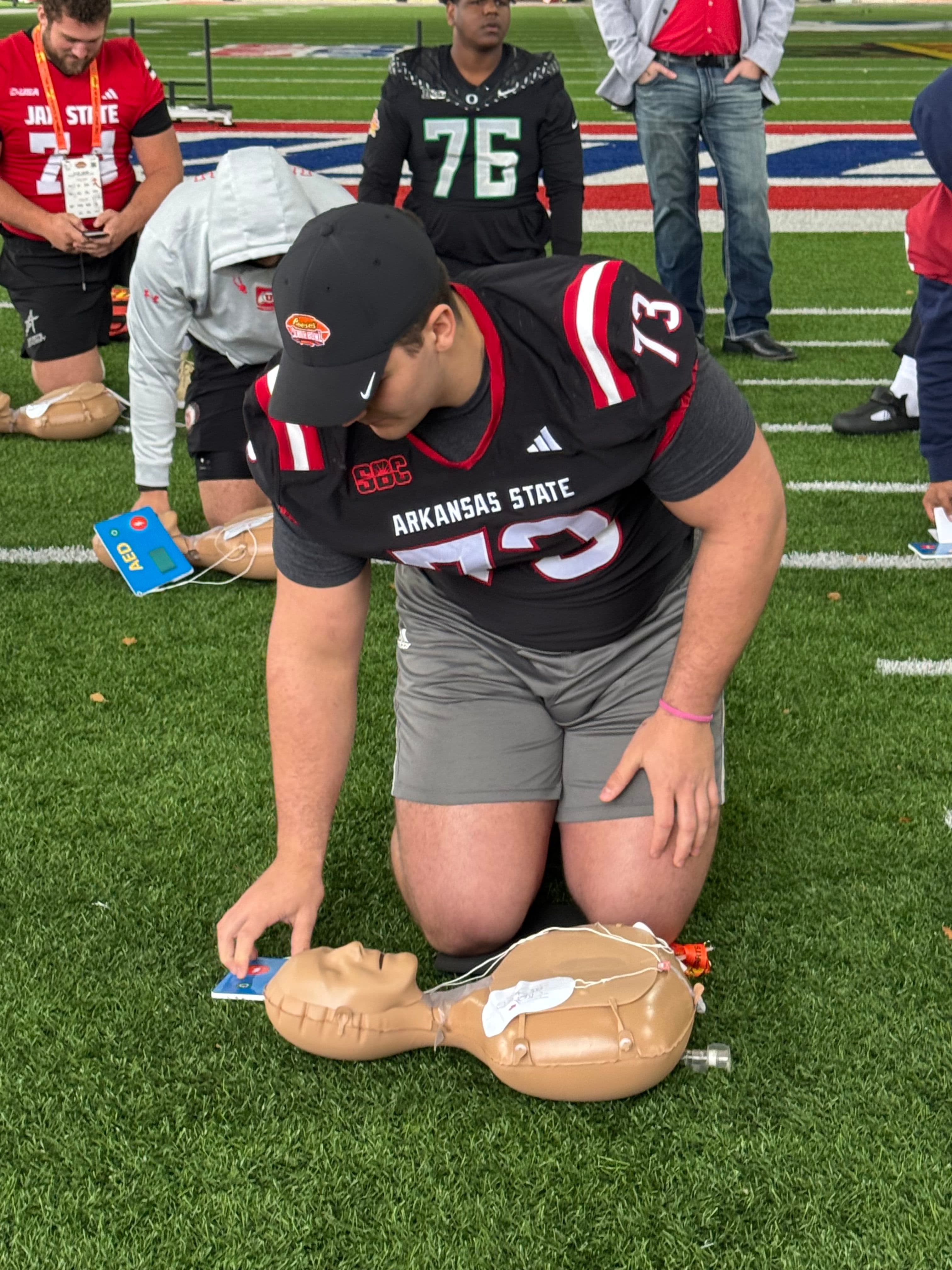
Potential NFL Draft prospects and coaches at the Reese's Senior Bowl learned Hands-Only CPR and automatic external defibrillator (AED) usage on their annual Community Service Day, joining the Nation of Lifesavers movement to increase community preparedness for cardiac emergencies. According to American Heart Association data, 9 out of 10 people who experience cardiac arrest outside of a hospital die, often because immediate CPR is not performed. By learning compression-only CPR, these athletes are gaining a valuable skill that can significantly improve survival rates.
Nancy Brown, CEO of the American Heart Association, emphasized the importance of early recognition and action during cardiac emergencies. Players used training manikins to learn proper compression techniques, understanding that calling 911 and performing chest compressions can be lifesaving. The initiative features cardiac arrest survivor Damar Hamlin, a Senior Bowl alumni and Buffalo Bills safety, as the Nation of Lifesavers movement's national ambassador. Hamlin's own experience of receiving CPR and AED treatment on live television underscores the critical nature of these skills.
The training is part of a broader effort by organizations like the NFL's Smart Heart Sports Coalition to prevent fatal cardiac events, particularly among young athletes. The American Heart Association reports that more than 23,000 people under 18 experience out-of-hospital cardiac arrests annually, with nearly 40% being sports-related. By providing CPR training to these potential professional athletes, the Reese's Senior Bowl and the American Heart Association are not only equipping individuals with life-saving skills but also raising awareness about the importance of immediate emergency response.
This initiative matters because it leverages the platform of high-profile athletes to address a critical public health issue. When professional athletes and coaches become trained in CPR and AED usage, they serve as influential role models who can encourage broader community participation in emergency preparedness. The involvement of Damar Hamlin, whose cardiac arrest during a 2023 NFL game was witnessed by millions, adds powerful personal testimony to the importance of these skills. His survival story demonstrates that immediate intervention with CPR and AEDs can save lives even in the most visible and high-pressure situations.
The implications extend beyond the football field to communities nationwide. As these athletes potentially enter the NFL, they carry with them not only athletic skills but also the ability to respond to cardiac emergencies in their communities, training facilities, and public spaces. The training addresses a significant gap in emergency response, particularly for sports-related incidents where young athletes are vulnerable. With cardiac arrest survival rates dramatically improving when bystander CPR is administered immediately, this initiative has the potential to save countless lives by creating a ripple effect of trained individuals across communities.