

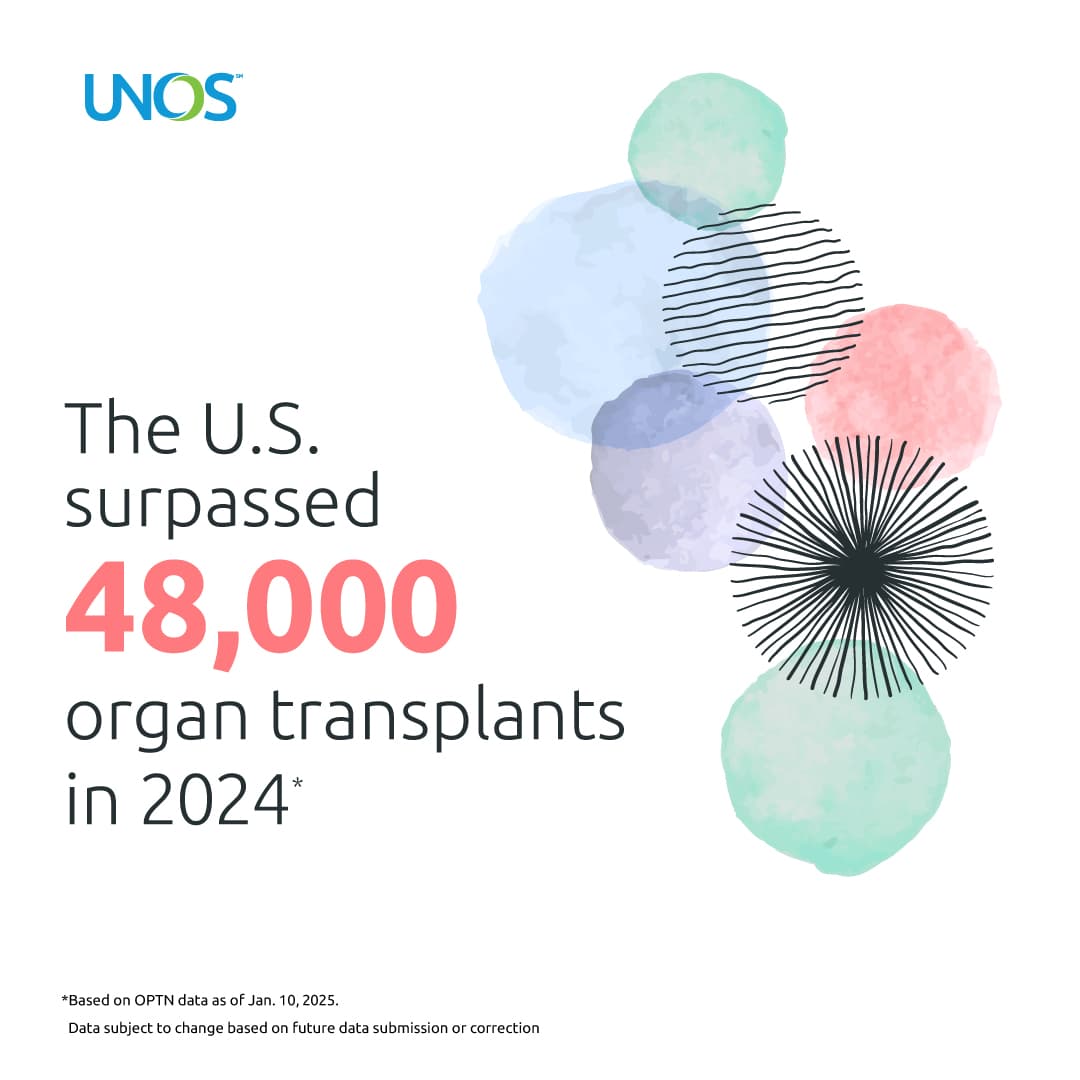
The United Network for Organ Sharing announced that 48,149 organ transplants were performed in the United States in 2024, representing an unprecedented milestone as the nation surpassed 48,000 transplants in a single year for the first time. This achievement translates to an average of 132 transplants per day, made possible through the contributions of 16,988 deceased donors and 7,030 living donors supported by medical professionals across the country. UNOS CEO Maureen McBride emphasized that each transplant represents an individual story and a life saved or improved, highlighting the human impact behind these statistics.
While celebrating this lifesaving accomplishment, UNOS has proposed several critical policy reforms requiring Congressional action that could potentially prevent an estimated 4,000 deaths and significantly improve the organ donation and transplantation system. These recommendations include mandating automated donor referrals to streamline the identification process, implementing in-cabin airline transportation for organs to ensure safer and more efficient delivery, creating a national tracking system for unaccompanied organs to prevent logistical failures, and incentivizing transplant hospitals to accept more medically complex organs that might otherwise go unused.
McBride noted that while the 48,000 transplants represent a significant achievement, substantial work remains to support the thousands of patients still awaiting transplants. The proposed reforms address systemic barriers that currently limit transplantation opportunities, with automated referrals potentially identifying more potential donors, improved transportation methods reducing organ damage during transit, better tracking preventing organ loss, and hospital incentives increasing utilization of available organs. These measures collectively aim to transform the efficiency and effectiveness of the entire transplantation ecosystem.
UNOS continues to advocate for systemic improvements through its Action Agenda, which focuses on developing technologies, conducting research, and bringing communities together to save lives. The organization's comprehensive approach recognizes that technological innovation must be paired with policy changes and community engagement to maximize impact. As the nation celebrates this record-breaking year in transplantation, the proposed reforms offer a roadmap to build upon this success and address the ongoing need for organs that continues to outpace availability, ensuring that more patients receive the life-saving transplants they desperately need.