

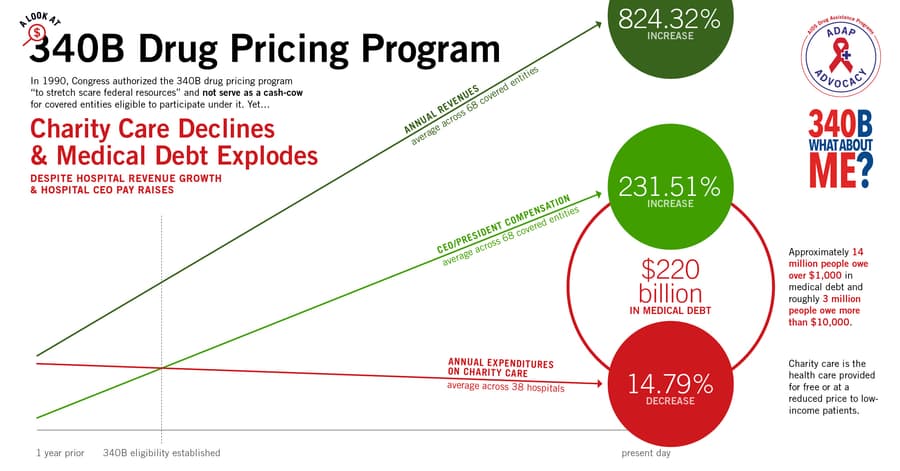
The 340B Drug Pricing Program, established in 1992, requires pharmaceutical manufacturers to provide outpatient drugs to eligible healthcare organizations at significantly reduced prices with the goal of stretching scarce federal resources and improving access to medications for uninsured and low-income patients. However, ADAP Advocacy, an organization dedicated to improving access to care for individuals living with HIV/AIDS, has released a series of infographics that raise serious questions about whether the program is achieving its intended objectives. The infographics, published as part of ADAP Advocacy's 340B Project, present data suggesting troubling trends that contradict the program's mission of supporting vulnerable populations.
According to the infographic series, hospital charity care has been declining under the 340B program, which is particularly concerning since charity care serves as a crucial safety net for patients who cannot afford medical treatment. Simultaneously, the data reveals that medical debt is exploding, indicating that patients are increasingly bearing the financial burden of their healthcare needs. This dual trend of reduced institutional support and increased patient financial strain creates a concerning picture of healthcare accessibility for vulnerable populations. The ADAP Advocacy-sponsored Ryan White Grantee 340B Patient Advisory Committee has taken particular note of these issues, focusing on how medical debt impacts patients living with chronic illnesses and rare diseases who are often disproportionately affected by high healthcare costs.
Perhaps most striking is the juxtaposition of these negative patient outcomes against the backdrop of hospital revenue growth and rising hospital CEO pay. This contrast raises fundamental questions about whether the benefits of the 340B program are being appropriately channeled to support patient care and reduce healthcare costs for vulnerable populations. The apparent disconnect between institutional financial success and patient financial burdens suggests that the program's savings may not be reaching those most in need. For stakeholders across the healthcare industry, including hospitals, pharmaceutical companies, and patient advocacy groups, this infographic series provides valuable insights into the current implementation of the 340B program and may spark important conversations about how to better align the program with its original intent.
The release of these infographics comes at a critical time when healthcare affordability and access are at the forefront of national discussions. As policymakers and healthcare leaders grapple with ways to improve the U.S. healthcare system, the data presented by ADAP Advocacy may prompt a reevaluation of the 340B program and its implementation. Healthcare policymakers and researchers may use this information to inform future studies and policy decisions related to drug pricing programs and hospital financial practices. The infographic series is available for download on the ADAP Advocacy website at https://www.adapadvocacy.org/publications.html#i, providing a visual and accessible resource for understanding these complex issues.
Patients and consumer advocates may find this information particularly relevant as it highlights the growing issue of medical debt, which can have long-lasting impacts on individuals' financial stability and access to care. The infographics could serve as an important tool for these groups to advocate for changes in how the 340B program is implemented and monitored. As discussions around healthcare reform continue, the information provided by ADAP Advocacy's infographic series may serve as a catalyst for change, encouraging closer examination of how drug pricing programs can be structured to better serve patients and achieve their intended goals of improving access to care and reducing healthcare disparities.