

Scientists from the Beijing Institute of Graphic Communication and Beihang University have developed a bioinspired yarn capable of efficiently harvesting water from fog, presenting a novel approach to atmospheric water collection that could provide a sustainable solution for regions facing severe water shortages. The research, published in the Chinese Journal of Polymer Science on April 10, 2024, represents a significant advancement toward combating water scarcity through biomimetic design principles.
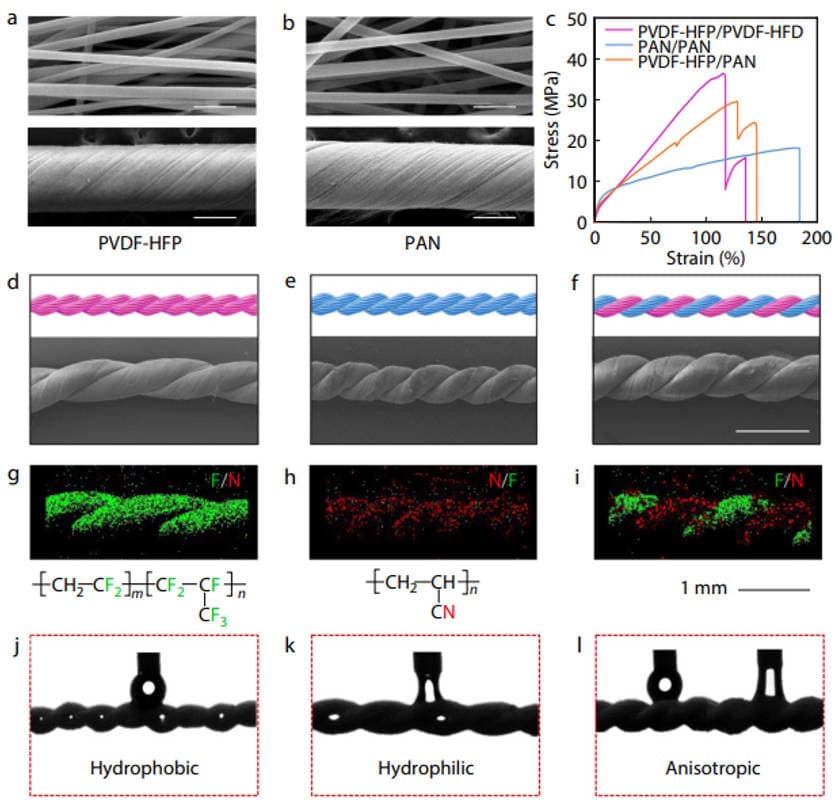
The innovative yarn design draws inspiration from the water-collecting abilities of desert beetles and spider silk. By combining hydrophobic poly vinylidene fluoride-co-hexafluoropropylene (PVDF-HFP) and hydrophilic polyacrylonitrile (PAN) nanofibers, the researchers created a double-stranded yarn with alternating hydrophobic and hydrophilic segments. This unique structure mimics nature's efficient water-harvesting mechanisms, allowing for rapid water droplet accumulation and enhanced transportation. Using electrospinning and twisting techniques, the team engineered the yarn to optimize its fog-collecting capabilities, with hydrophobic sections promoting quick water droplet formation and hydrophilic sections facilitating droplet transport for faster coalescence and collection.
When tested in a controlled fog environment, the yarn demonstrated remarkable efficiency, achieving a water collection rate of 3.20 g·h−1·cm−2. Prof. Yong Zhao from Beihang University, an expert in bioinspired materials, emphasized the significance of this breakthrough, noting that the alternating wettability design emulates nature's precision to significantly boost fog collection performance. The full study detailing these findings is available at https://doi.org/10.1007/s10118-024-3109-5.
The implications of this research extend far beyond the laboratory as water scarcity continues to affect millions of people worldwide, particularly in arid and remote regions. The development of efficient water harvesting technologies becomes increasingly crucial in this context. The scalable and high-performance nature of this bioinspired yarn makes it a promising solution for fog-prone areas, offering a reliable source of freshwater without the high energy demands or slow water release processes associated with conventional methods. This innovation not only addresses immediate water needs but also paves the way for future advancements in atmospheric water collection systems.
By demonstrating the effectiveness of biomimetic design in tackling environmental challenges, the research opens up new avenues for sustainable technology development. The study was supported by various funding sources, including the National Natural Science Foundation of China, Beijing Natural Science Foundation, and the Fundamental Research Funds for the Central Universities, underscoring the collaborative effort and recognition of the project's potential impact. As the global community continues to grapple with the effects of climate change and increasing water scarcity, innovations like this bioinspired yarn offer hope for sustainable solutions that harness nature's design principles to ensure water security for future generations.