

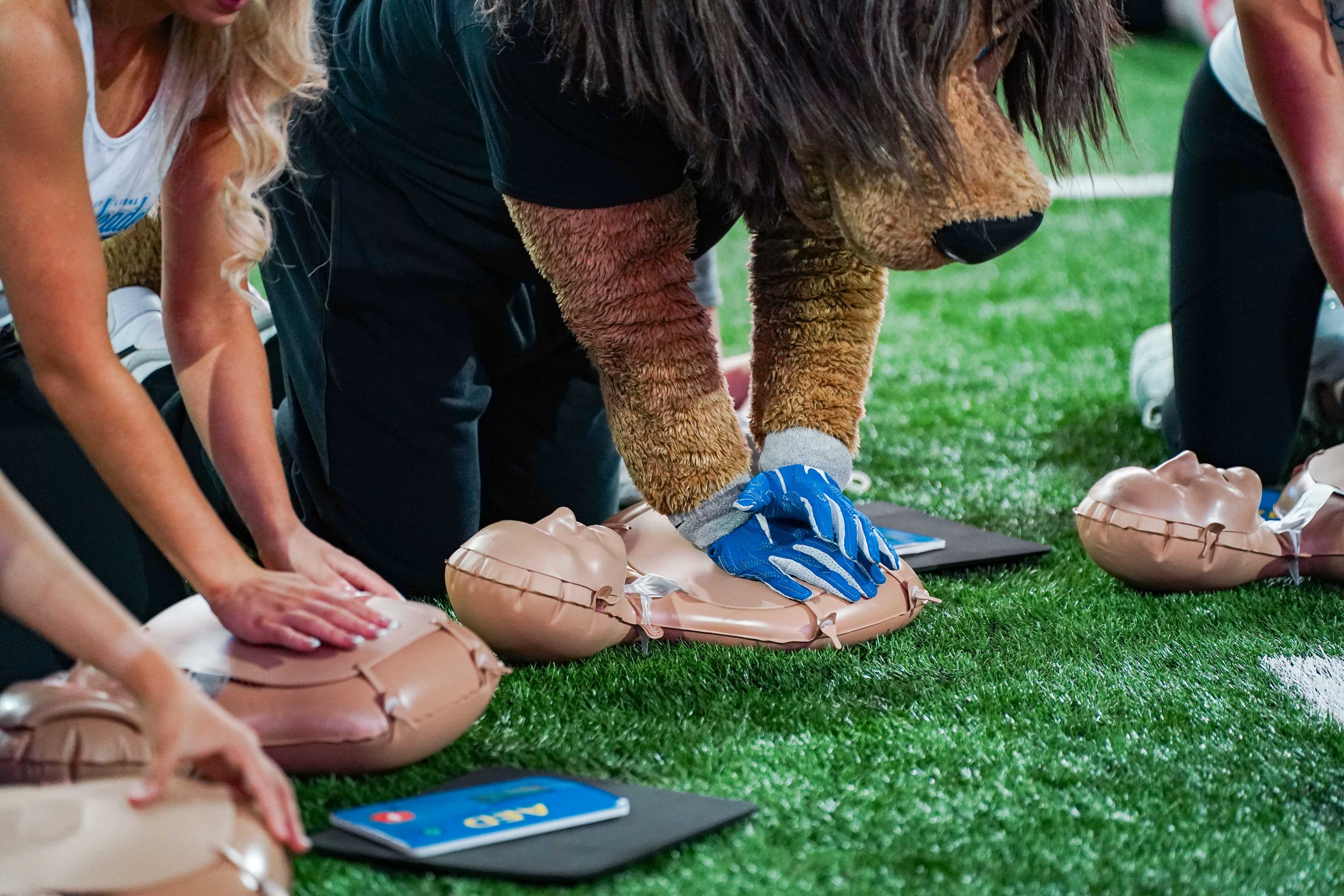
Hundreds of Michigan residents acquired potentially lifesaving cardiopulmonary resuscitation skills through a training event held at Ford Field on September 16. Organized by the Detroit Lions and the American Heart Association, this initiative addresses the critical need for immediate CPR response in cardiac emergencies. According to American Heart Association data, 9 out of 10 individuals who experience cardiac arrest outside of a hospital setting do not survive, with more than half of these cases lacking immediate CPR. The AHA emphasizes that prompt CPR can significantly improve survival odds, potentially doubling or tripling a person's chance of survival.
This event, the second of its kind hosted by the Detroit Lions and AHA, offered participants two course options. The first was the American Heart Association's Heartsaver® CPR course, providing comprehensive training in CPR techniques and proper use of automated external defibrillators. The second option focused on Hands-Only CPR, a method proven to be as effective as conventional CPR in the crucial initial minutes of a cardiac emergency. Nancy Brown, chief executive officer of the American Heart Association, highlighted the critical nature of this training, stating that early recognition and action in a cardiac emergency is the difference between life and death.
The event's significance extends beyond individual training as participants used the Association's CPR in Youth Sports Kits, which include manikins and AED training tools. These kits will be donated to the community, ensuring ongoing education efforts and expanding the reach of this lifesaving knowledge. Roxanne Caine, Vice President of Detroit Lions Foundation and Community Relations, emphasized the organization's commitment to this cause, noting that just as every play matters in sports, every action in CPR can be lifesaving.
The American Heart Association, celebrating its centennial year in 2024, continues to lead in resuscitation science, education, and training. They publish the official guidelines for CPR, underlining their authoritative role in this critical field. With nearly 75% of out-of-hospital cardiac arrests occurring in homes and over 350,000 such events happening annually in the United States, widespread knowledge of CPR is more crucial than ever. This collaborative effort represents a significant step toward creating a more prepared and resilient community by equipping individuals with skills that strengthen the chain of survival in cardiac emergencies.