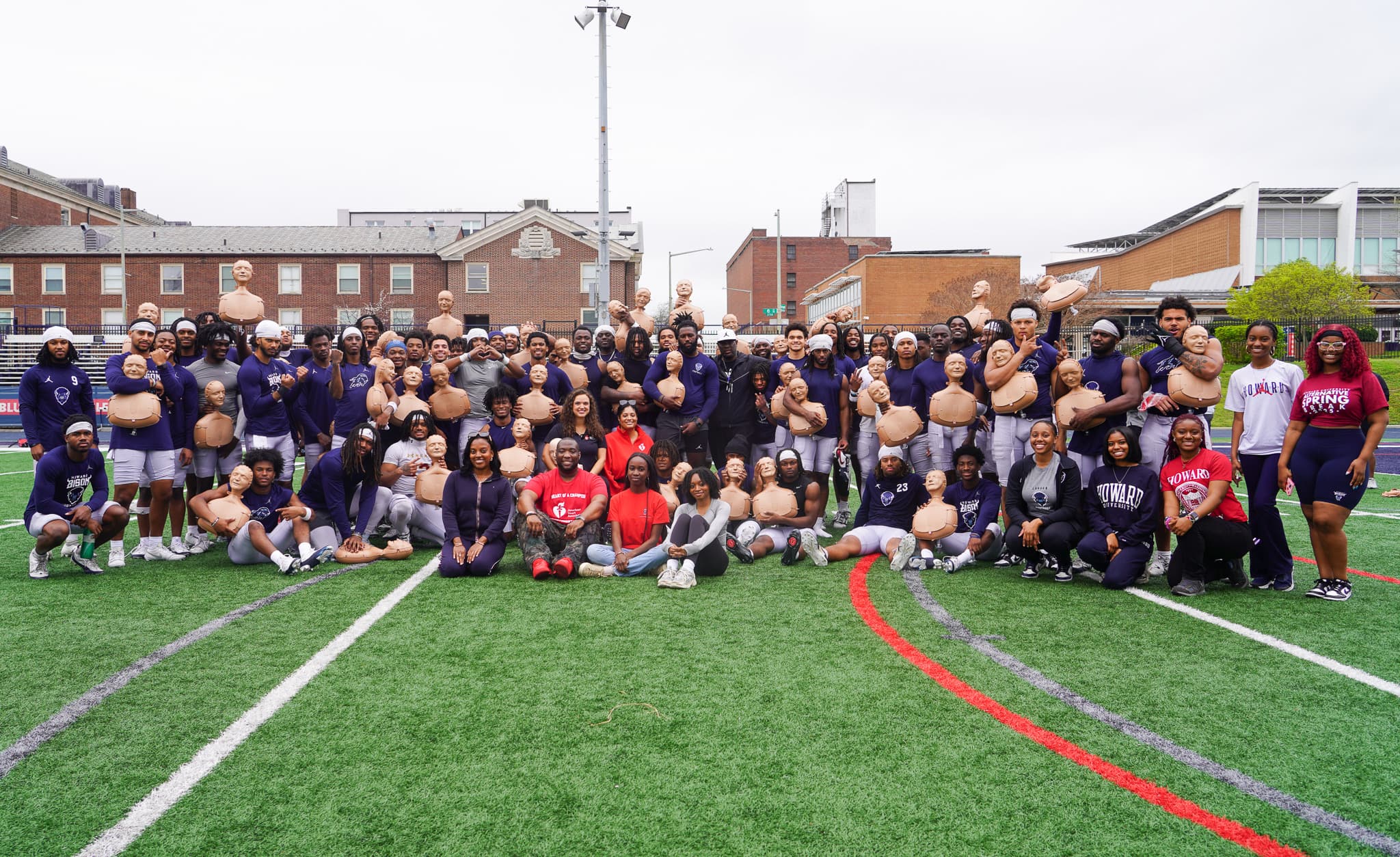
The Howard University football team has joined the American Heart Association's Nation of Lifesavers, learning critical cardiopulmonary resuscitation (CPR) skills that could potentially save lives in emergency situations. During a training session on Saturday, April 5, the team learned the correct rate and depth of CPR compressions to respond effectively to cardiac emergencies. According to American Heart Association data, 9 out of 10 people who experience cardiac arrest outside of a hospital die, largely because immediate CPR is not performed. By learning Hands-Only CPR, the team can help improve survival chances, which can double or triple when CPR is administered quickly.
The team's participation extends beyond training, as they are also engaging in broader awareness efforts. Players participated in the National Walking Day social media campaign and will create public service announcements during CPR and AED awareness week in June to encourage fans and followers to learn lifesaving techniques. Howard University's head football coach, Larry Scott, emphasized the training's importance, stating that the ability to potentially save a life is invaluable. The team's involvement aligns with the American Heart Association's goal of doubling sudden cardiac arrest survival rates by 2030.
The training is particularly significant given that nearly 350,000 people in the United States experience out-of-hospital cardiac arrests annually, with approximately 3 out of 4 occurring in homes. For student-athletes, the stakes are even higher, as cardiac arrest is a leading cause of death, with around 23,000 children under 18 experiencing cardiac events outside hospitals each year. Through this initiative, the Howard University football team is not just improving their athletic skills but also becoming critical community health advocates, potentially transforming how people respond to medical emergencies. The program highlights the role of athletic programs in public health, leveraging their visibility to promote essential skills that address a widespread medical issue affecting diverse populations across the country.