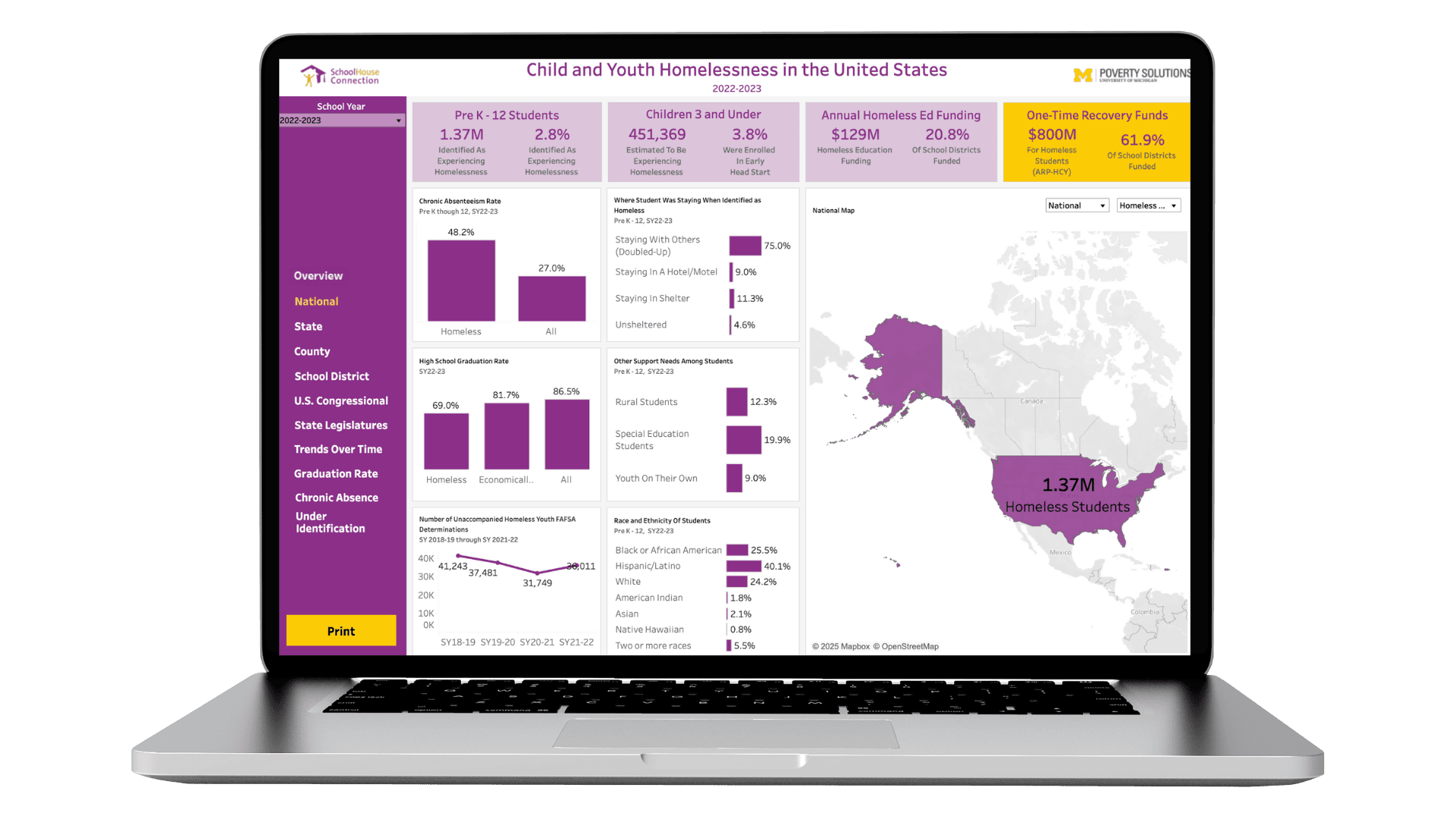
SchoolHouse Connection and the University of Michigan's Poverty Solutions have released interactive data profiles that offer an unprecedented look into child and youth homelessness across the United States. These new profiles organize and analyze federal data spanning a four-year period, revealing critical information about educational challenges faced by homeless students. The interactive dashboard enables users to explore homelessness trends across multiple geographic levels, from national and state perspectives to local communities, U.S. Congressional districts, and state legislative districts. A key feature of the profiles helps school districts assess potential under-identification of students experiencing homelessness.
Barbara Duffield, Executive Director of SchoolHouse Connection, emphasized the significance of these data profiles, stating that child and youth homelessness remains largely invisible in communities and schools. The profiles aim to illuminate the harmful impacts of homelessness on student attendance and academic achievement while identifying potential areas for improvement. Jennifer Erb-Downward from Poverty Solutions highlighted the profiles' importance in making information accessible to decision-makers at local, state, and national levels. By providing comprehensive data, the profiles can help stakeholders develop more effective strategies to prevent and address youth homelessness.
The data profiles offer critical comparisons between homeless students and their housed peers, examining key educational indicators such as chronic absenteeism and graduation rates. This comparative analysis provides valuable insights into the educational disparities experienced by students facing housing instability. Users of the interactive dashboard can explore trends, interpret patterns, and utilize the information to inform local and state policy decisions. The profiles represent a significant step toward understanding and addressing the complex challenges of youth homelessness in educational settings. The initiative builds on previous research and resources available through SchoolHouse Connection and the University of Michigan's Poverty Solutions program, which have long focused on data-driven approaches to poverty reduction.
This release comes at a critical time when many communities are grappling with rising housing costs and economic instability that disproportionately affect children and youth. The ability to examine homelessness data at multiple geographic levels allows for more targeted interventions and resource allocation. School districts can use these tools to identify gaps in their identification processes and better support students who might otherwise go unnoticed. The profiles also enable researchers and advocates to track progress over time and measure the effectiveness of various interventions aimed at reducing youth homelessness and its educational consequences.
The implications of this data release extend beyond educational institutions to broader social service systems and policy arenas. By making complex federal data accessible and interactive, the profiles empower a wider range of stakeholders to engage with this issue. This transparency could lead to increased accountability and more coordinated efforts across different sectors working to address homelessness. The comparative data on educational outcomes provides compelling evidence of the need for specialized support services and policies that recognize the unique challenges faced by students experiencing housing instability.