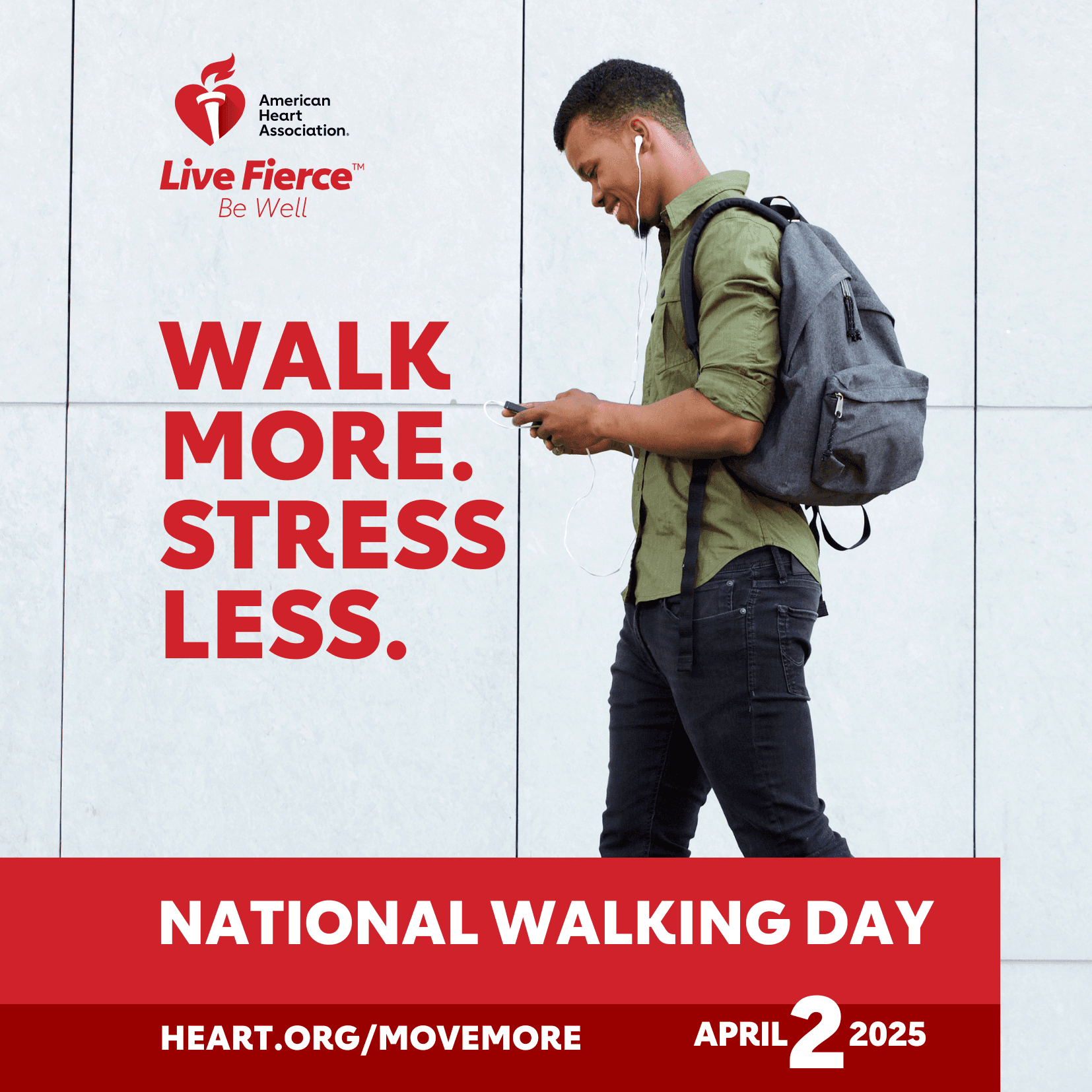
The American Heart Association is confronting a major national health issue through its promotion of National Walking Day, an initiative targeting sedentary behavior and its associated health dangers. With statistics showing one in four U.S. adults sitting for over eight hours daily, the rising concerns about heart disease, stroke, and mental health challenges underscore the urgency of this effort. Dr. Eduardo Sanchez, the organization's chief medical officer for prevention, stressed that walking offers an accessible and effective approach to enhancing overall wellness, noting that even minimal movement can deliver significant health benefits.
The association's guidelines recommend at least 150 minutes of moderate-intensity aerobic activity weekly, such as brisk walking or gardening, complemented by two days of muscle-strengthening activities to maximize health outcomes. Practical methods to boost daily physical activity include walking with friends or colleagues, taking conference calls while moving, walking pets, and engaging in family evening strolls. For those with limited mobility, alternatives like seated exercises or gentle stretching are suggested. Walking is integral to the American Heart Association's Life's Essential 8™ framework, a comprehensive strategy for achieving optimal cardiovascular health. By advocating for consistent, moderate physical activity, this initiative seeks to transform sedentary habits and foster long-term wellness, directly addressing the pervasive risks highlighted by current inactivity trends.