

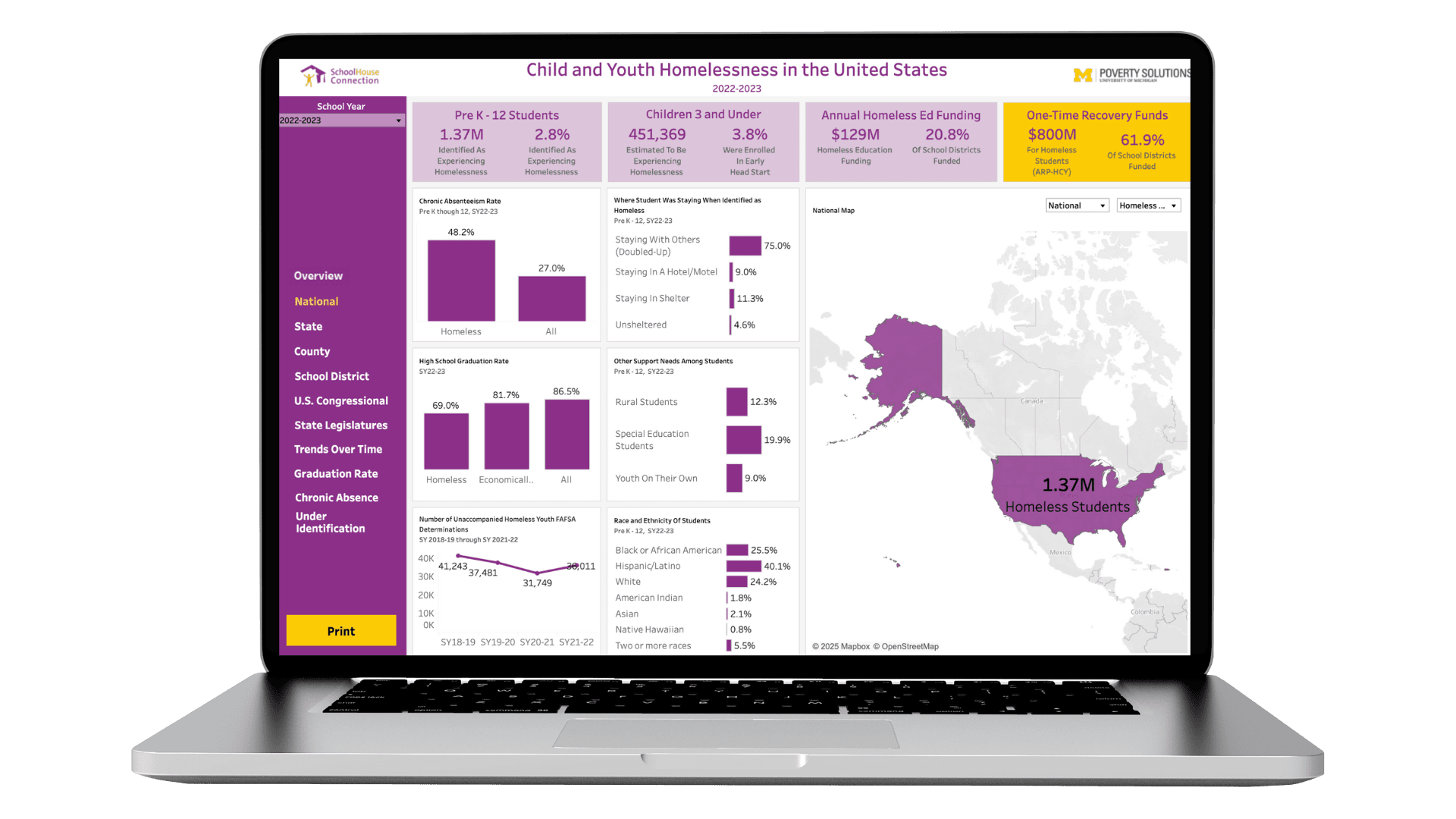
A new interactive data dashboard developed by SchoolHouse Connection and the University of Michigan's Poverty Solutions provides an unprecedented look into the complex landscape of child and youth homelessness in the United States. The comprehensive tool organizes and analyzes federal data spanning four years, offering users a nuanced understanding of homelessness trends across multiple geographic levels. The dashboard enables exploration of homelessness data from national and state levels down to local communities, U.S. Congressional districts, and state legislative districts. Its innovative features help school districts assess potential under-identification of students experiencing homelessness and highlight districts categorized as "severely underfunded" - those identifying homeless students but lacking McKinney-Vento subgrants for support.
A critical component of the dashboard allows users to compare educational outcomes between homeless and housed students through key indicators such as chronic absenteeism and graduation rates. These comparisons shed light on the profound educational challenges faced by students experiencing housing instability. Barbara Duffield, Executive Director of SchoolHouse Connection, emphasized the significance of the data profiles, stating that "child and youth homelessness is largely invisible in our communities and schools." The new interactive tool aims to illuminate these often-overlooked students and the significant barriers they encounter in accessing consistent education.
The data profiles are now available through SchoolHouse Connection's interactive data profiles, providing researchers, policymakers, and educators with a powerful resource for understanding and addressing youth homelessness. This tool matters because it transforms abstract statistics into actionable insights, revealing systemic gaps in identification and funding that perpetuate educational inequities. By making homelessness visible at granular geographic levels, the dashboard empowers local decision-makers to target interventions where they are most needed, potentially improving outcomes for vulnerable students who might otherwise remain hidden within educational systems.