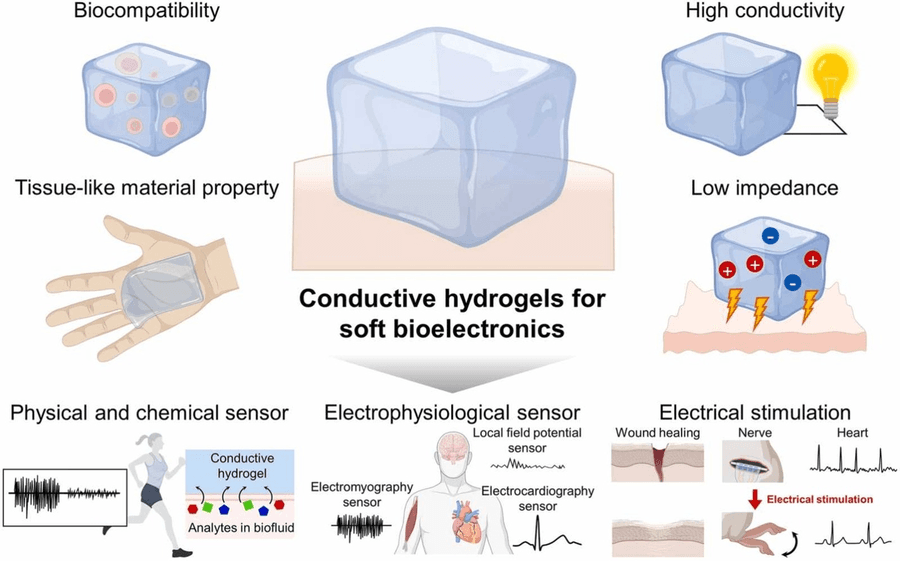
A recent systematic review of conductive hydrogels has illuminated their significant potential in bridging biological tissues with electronic devices. The study, conducted by researchers from the Institute for Basic Science in Seoul and Seoul National University, examines how these materials' electrical and mechanical properties relate to various conductive fillers. Conductive hydrogels have emerged as crucial for soft bioelectronics, particularly where compatibility with human tissues is essential. These materials combine high water content, tissue-like modulus, and ionic conductivity, creating an effective interface with biological systems.
Lead author Yoonsoo Shin emphasizes that conductive hydrogels represent a frontier in merging biology with electronics, noting their versatility in adjusting properties makes them indispensable for next-generation wearable and implantable devices. The review highlights their role in biosignal monitoring and electrical stimulation. Enhanced with conductive fillers like carbon nanomaterials, conducting polymers, and metal-based nanomaterials, these hydrogels maintain softness while improving electrical performance. Their conformal contact, low impedance, and high charge injection capacity make them suitable for real-time monitoring and therapeutic applications.
Professor Dae-Hyeong Kim observes that the ability of conductive hydrogels to adapt to dynamic environments while maintaining robust electrical performance has revolutionized how we think about interfacing electronics with the human body. The tunable mechanical and electrical characteristics enable diverse applications, from wearable sensors and neural interfaces to drug delivery systems and artificial muscles. Their biocompatibility and biodegradability ensure minimal immune response and environmental impact, making them ideal for temporary implants and sustainable biomedical devices.
Recent advancements demonstrate potential integration with electronic components like flexible circuits and microfluidic systems, creating multifunctional platforms capable of simultaneous sensing, stimulation, and therapy. This opens new possibilities in personalized medicine and human-machine interfaces. Looking ahead, researchers envision a future where conductive hydrogels enable seamless integration of bioelectronics into daily life, from real-time health monitoring to adaptive therapeutic devices. The development promises to unlock unprecedented possibilities in personalized medicine, robotics, and human-machine interfaces.
This research, funded by the Institute for Basic Science, Republic of Korea (IBS-R006-A1), represents a significant step forward in biomedical technology. The findings, published in the journal Wearable Electronics, provide valuable insights into the current state and future directions of conductive hydrogel research. As the field advances, it holds promise for revolutionizing healthcare, wearable technology, and how we interact with electronic devices. The potential impact on patient care, personalized medicine, and advanced biomedical devices underscores the importance of continued research and innovation in this rapidly evolving field.