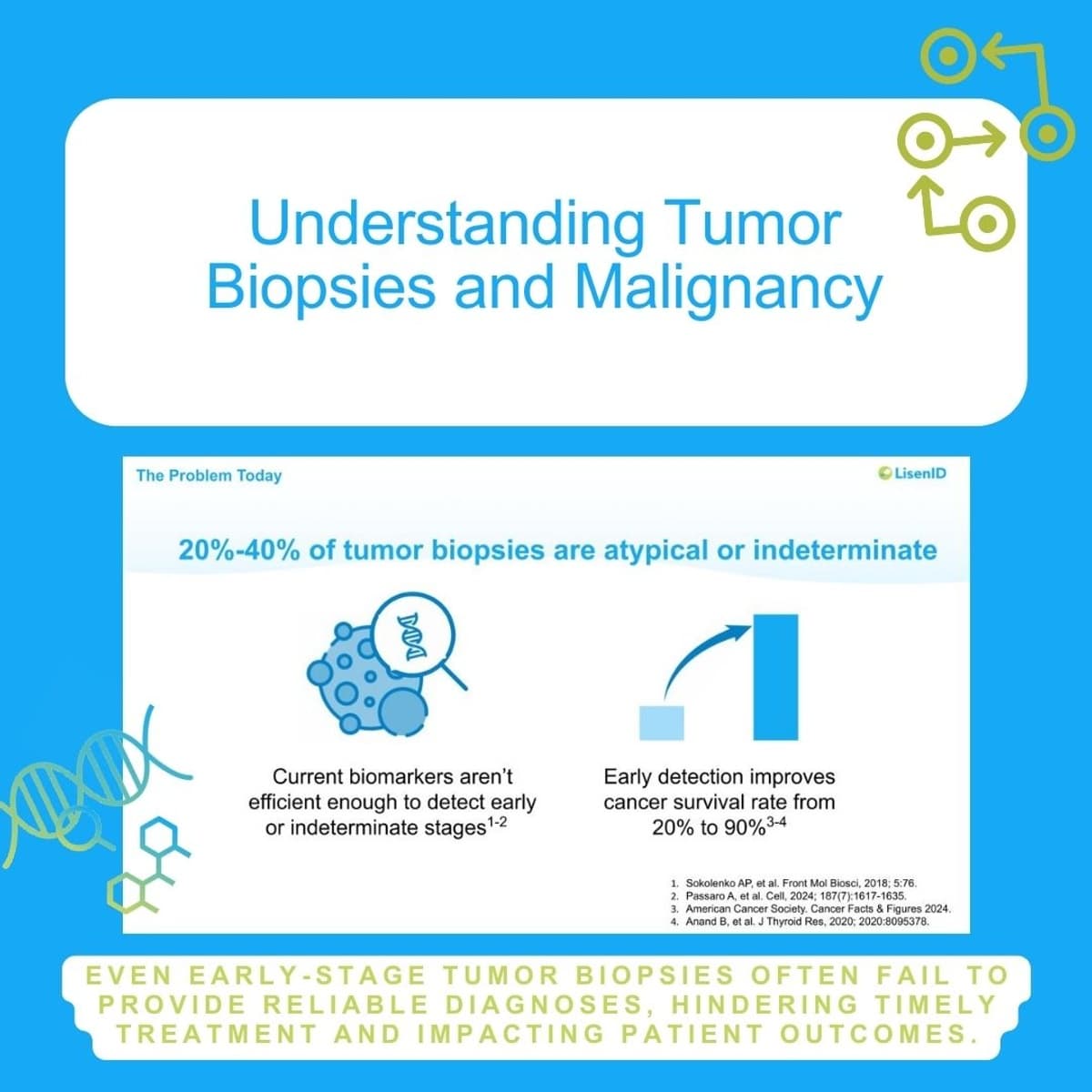
Medical technology firm LisenID has partnered with Mayo Clinic to develop a diagnostic approach for early cancer detection, focusing initially on lung cancer diagnosis. The collaboration leverages LisenID's proprietary Quantitative Chromogenic Imprinted Gene In-Situ Hybridization (QCIGISH) technology, which offers a novel method for identifying cancer at its earliest stages. The proposed diagnostic test will utilize transbronchial needle aspiration (TBNA) samples to detect malignancies in peripheral pulmonary lesions with unprecedented accuracy. Unlike traditional genetic mutation-based diagnostics, QCIGISH technology can identify epigenetic imprinting biomarker abnormalities, providing a more sensitive and specific cancer detection method.
LisenID has demonstrated significant promise in early cancer detection, with reported sensitivity exceeding 95% and specificity of 90% across various cancer types, including lung, thyroid, cervical, and other malignancies. This collaboration aims to clinically validate and potentially commercialize the diagnostic technology, with the ultimate goal of improving patient care through earlier intervention. Dr. Tina Cheng, LisenID's co-founder and technological inventor, emphasized the significance of partnering with Mayo Clinic, a renowned leader in clinical research and patient care. The initial research will focus on developing a laboratory-developed test (LDT) for lung cancer detection, with potential future expansion to other cancer types.
The partnership represents a significant advancement in cancer diagnostics, offering hope for more precise, early-stage cancer detection. By identifying cancer at its inception, the technology could potentially reduce unnecessary treatments and improve patient outcomes across multiple cancer types. Following clinical validation, LisenID plans to introduce the diagnostic test as a Laboratory Developed Test, with the potential for broader regulatory approval and market adoption. Mayo Clinic, which has a financial interest in the technology, will use any resulting revenue to support its non-profit mission of patient care, education, and research.
Researchers have published multiple studies supporting the potential of this innovative diagnostic approach, including publications in Clinical Epigenetics, Journal of Clinical Oncology, and Cancer Communications, lending scientific credibility to the emerging technology. The implications of this announcement are substantial for cancer care, as earlier detection typically correlates with better treatment outcomes and survival rates. The technology's ability to detect epigenetic changes rather than just genetic mutations could represent a paradigm shift in how cancers are identified and monitored. For patients, this could mean earlier interventions, more targeted treatments, and potentially reduced healthcare costs associated with advanced cancer care.
The collaboration between an innovative medical technology company and a leading clinical institution like Mayo Clinic accelerates the translation of research into clinical practice. The financial arrangement, where Mayo Clinic will use revenue to support its non-profit mission, aligns commercial success with patient benefit. As cancer remains a leading cause of death worldwide, advancements in early detection technologies like QCIGISH could have far-reaching implications for public health. The technology's reported high sensitivity and specificity across multiple cancer types suggests potential applications beyond the initial lung cancer focus, possibly creating a platform for early detection of various malignancies.